
From Gatekeeper to Gate Opener: Using AI to Expand Language, Preserve Authorship, and Support Co-Construction in AAC
View a global list of converted local start times
Session ID: 17
Objectives:
1. Explain how co-construction provides a framework for understanding AI-supported communication in AAC.
2. Describe how AI can be used therapeutically to expand compressed AAC messages while preserving authorship and communicative intent.
3. Apply gate-opening intervention strategies that use AI to support language development, personality expression, and communicative participation for AAC users with direct and alternative access methods.
Abstract
Artificial intelligence (AI) is rapidly becoming embedded within augmentative and alternative communication (AAC) systems, creating both excitement and concern among clinicians, educators, and families. While much of the current discussion has focused on ethical considerations, authorship, and the potential risks of AI-generated language, less attention has been given to AI’s potential as a therapeutic tool for language intervention. This presentation proposes a shift from a gatekeeping perspective – where AI is viewed primarily as a threat to authentic communication -to a gate-opening framework in which AI serves as another communication partner that supports language development while preserving the individual’s authorship, identity, and communicative intent.
Communication has never been an entirely independent act. Human language is inherently co-constructed through interaction with communication partners who naturally interpret, expand, clarify, scaffold, and negotiate meaning (Bruner, 1983; Vygotsky, 1978; Bakhtin, 1986). These co-constructive processes begin in infancy and continue throughout adulthood in everyday conversations, collaborative writing, text messaging, predictive text, and supported communication. Within AAC intervention, clinicians routinely model language, expand utterances, clarify intent, and support conversational repair. Viewed through this lens, AI does not introduce a fundamentally new process; rather, it represents an additional communication partner capable of participating in the co-construction of language when its role is intentionally designed to preserve the AAC user’s agency.
A central concept explored in this presentation is “communication compression” – the natural tendency for AAC users to communicate using highly efficient, abbreviated messages that reflect the physical, cognitive, visual, or temporal effort required to generate language. This phenomenon is particularly evident among individuals using alternative access methods such as eye gaze, switch scanning, head pointing, or other indirect selection techniques, where producing each additional word requires measurable physical effort. Rather than reflecting limited linguistic competence, these compressed messages often represent sophisticated language economy in response to access demands. Unfortunately, communication partners may mistakenly interpret these abbreviated messages as reflecting limited language or limited intent.
AI offers an opportunity to reduce the motor and cognitive burden associated with message generation without assuming authorship of communication. Rather than generating language on behalf of the user, AI can provide multiple possible expansions of a compressed message, allowing the communicator to select, reject, modify, or combine options until the output accurately reflects their intended meaning. The communicative act therefore remains user-directed, with authorship residing in the individual’s decisions rather than in the AI-generated suggestions. This process closely mirrors natural conversational co-construction, in which listeners routinely propose interpretations that speakers confirm, reject, or refine.
The presentation will demonstrate practical intervention strategies for incorporating AI into language therapy beyond simple rate enhancement. Examples will illustrate how AI can support vocabulary expansion, narrative development, emotional expression, self-advocacy, conversational repair, inferencing, perspective taking, and flexible language generation. Participants will examine how AI-generated alternatives can expose communicators to multiple linguistic forms, emotional tones, and pragmatic choices, providing rich opportunities for explicit language instruction while maintaining user control over the final message.
Special consideration will be given to maintaining ethical implementation through transparent authorship, user-directed decision making, and the preservation of communicative competence (Light, 1989; Light & McNaughton, 2014). Rather than asking whether AI should generate language, clinicians are encouraged to ask how AI can facilitate richer opportunities for authentic language learning and meaningful participation.
As AI continues to evolve within AAC technology, clinicians have an opportunity to move beyond viewing AI as either a replacement for communication or merely a rate-enhancement feature. Instead, AI can become an intentional therapeutic partner that reduces communication burden while expanding opportunities for language development, identity expression, and authentic participation. This gate-opening framework positions AI not as a substitute for human communication, but as a tool that supports individuals in saying more of what they have always wanted to say.
References
Bakhtin, M. M. (1986). Speech genres and other late essays. University of Texas Press.
Bruner, J. (1983). Child’s talk: Learning to use language. W. W. Norton.
David R. Beukelman, D. R., & Pat Mirenda, P. (2020). Augmentative and alternative communication: Supporting children and adults with complex communication needs (5th ed.). Paul H. Brookes.
Janice Light, J. (1989). Toward a definition of communicative competence for individuals using augmentative and alternative communication systems. Augmentative and Alternative Communication, 5(2), 137–144.
Janice Light, J., & David McNaughton, D. (2014). Communicative competence for individuals who require AAC: A new definition for a new era of communication? Augmentative and Alternative Communication, 30(1), 1–18.
Lev Vygotsky, L. S. (1978). Mind in society: The development of higher psychological processes. Harvard University Press.
Speaker
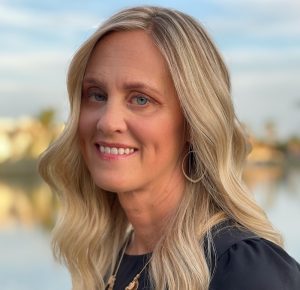
Brenda Del Monte
Technically Speaking, Chandler, AZ, United States of America