
The Future Starts Now: Strategic Planning for the Development of a Comprehensive School-Based AAC Program
View a global list of converted local start times
Session ID: 41
Objectives:
Participants will be able to:
1. Describe the sequence of steps within a strategic planning framework necessary for developing a successful strategic plan.
2. Describe the components of several essential planning areas that should be considered when developing comprehensive school-based AAC guidelines.
3. Prioritize and apply next steps in developing school-based AAC program guidelines within their current work setting.
Abstract
As an ASHA-certified speech/language pathologist and RESNA-certified assistive technology professional (ATP), I have intertwined the skills I’ve gained across my career with my clinical interests in order to develop a comprehensive augmentative and alternative communication (AAC) program at my current place of employment in Suffolk County, New York. I have combined both my formal education and clinical experiences over the years to establish AAC guidelines that encompass the diverse needs of the students, families, and personnel I support.
As a former ASHA State Education Advocacy Leader (SEAL) Champion, I was granted the opportunity as both a SEAL Champion and Hawai’i Speech-Language-Hearing Association (HSHA) president to participate in several rounds of strategic planning alongside my state association’s board of directors. More recently, as I moved to New York and began working with a new educational system, I have been able to apply my knowledge of the strategic planning framework towards the development of AAC program guidelines within my new community.
Upon beginning my current administrative role, I first analyzed the current status of my educational organization by identifying key stakeholders, financial constraints, and equipment needs. I also gathered quantitative and qualitative information about personnel training needs, local regulations related to IEP documentation, and family/cultural values and views of AAC. I noted a minimal amount of available equipment for trialing and daily classroom use, limited clinician knowledge of how to determine the need for an AAC system (and subsequently, limited knowledge of how to feature-match for a best-fit AAC system), a lack of staff knowledge regarding AAC implementation in the classroom, limited understanding from caregivers about AAC access/funding options, and a lack of consistency in IEP documentation regarding assistive technology services and personnel support. With this information, I then utilized a strategic planning framework to identify a vision, mission, and long/short-term goals across the above-mentioned areas. Once my strategic plan goals were clear and measurable, I developed outcomes and identified how our organization would measure success in meeting our goals.
From the first round of strategic plan goals and objectives (year one) up to the present day (year four), our organization has experienced a myriad of both quantitative and qualitative measures of growth; this information will be shared throughout the presentation. Of note, the number of students with IEP-mandated devices has substantially increased since the initiation of the first phase of the AAC program guidelines. Also, the number of caregiver and personnel trainings occurring each month has significantly increased; prior to the initiation of the AAC guidelines, there were limited IEP-mandated staff trainings taking place, and a small number of students requiring IEP-mandated caregiver trainings. Not only has the frequency of IEP-mandated trainings increased, but non- IEP-mandated trainings are occurring more often on an as-requested basis. The non-mandated training increase has been attributed to increased awareness from staff of the importance of AAC access, as well as more frequent AAC device access and use in the classroom.
Another noticeable change is that our organization is shifting from an expert-model towards a capacity-building model of AAC support. As AAC protocols are more consistently implemented, AAC devices are being utilized in the classroom setting; in turn, more awareness and visibility is occurring around AAC. Additionally, our SLPs are gaining the skills and confidence they need to support students who use AAC systems. During this presentation, I will describe the importance of creating outcomes and indicators of success in order to ensure that a program continues to thrive beyond its initial implementation.
Ultimately, this presentation will guide the decision-making process for clinicians and educators developing AAC guidelines/protocols. Attendees will learn how to create a strategic plan that aligns with their educational organization’s current protocols and future AT needs. During the session, participants will identify their current status in regards to developing a comprehensive AAC program, and will leave with a plan for making a strategic plan. Participants will not only learn to identify the procedural steps towards developing a strategic plan, but will be presented with options for seeking support with developing a plan. While each organization, district, and state approaches AAC access differently, participants will be able to work within the strategic planning framework to create an action plan that best fits their professional setting needs. My hope is to impact educational systems near and far as participants advocate for their students’ communication needs and rights by gaining the knowledge and courage to build a strategic plan with their school teams!
Speaker
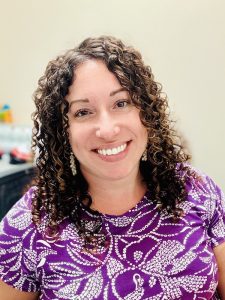
Melissa Friscia
Alternatives for Children, Setauket- East Setauket, NY, United States of America