
Beyond the Device: Navigating AAC in Everyday Life as a User, Tester, and Advocate
View a global list of converted local start times
Session ID: 29
Objectives:
- Describe the real-life of integrating multiple AAC and AT tools, including the head tracking, on-screen keyboard, and RTT, keyboard shortcuts
- Identify at least three accessibility gaps that persist for AAC users despite the availability of technological solutions
- Apply at least one insight from this session, grounded in lived AAC experience, to their own clinical practice, research product development for advocacy work
Abstract
AAC research tells us a great deal about what people who use augmentative and alternative communication (AAC) can do with the right support. It tells us far less about what it feels like to navigate a world not designed with you in mind — and what it costs, every day, to bridge that distance.
This session centers on a perspective that remains underrepresented at AAC conferences: that of the disabled professional who is also a daily AAC user. The presenter holds certification in accessibility core competencies and works across digital accessibility auditing, plain-language research communication, and disability advocacy. These roles are not held in spite of disability; they are shaped directly by it. And they intersect in ways the field rarely sees modeled.
What does it mean to audit an inaccessible system when you are the person that system excludes? What is lost when AAC research is written for clinicians and researchers, but not for the people it describes? What does genuine inclusion look like when the person at the table is not a subject or a stakeholder, but an expert?
This session does not offer a technology showcase. It offers a reckoning — an honest account of what ‘AAC in everyday life’ actually requires, where the field still falls short, and what becomes possible when disabled users are treated as authorities on their own experience.
Drawing on real-world use of a range of AAC and assistive technology (AT) tools, including head tracking, real-time text (RTT), voice banking, and AAC applications, the session examines how these technologies interact in daily professional and personal life, where they succeed, and where significant gaps remain. It also examines the advocacy layer: what it takes to translate AAC research into language that communities can use, and what the field loses when that translation work is left to people without lived experience.
Speaker
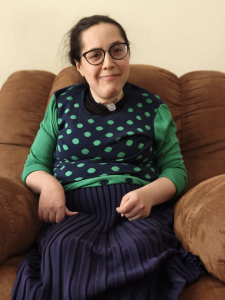
Esther Klang
Esther Klang, Brooklyn, NY, United States of America