
Family Camp as a Naturalistic AAC Intervention Model: Outcomes for Minimally Speaking Autistic Adults and Graduate SLP Students
View a global list of converted local start times
Session ID: 5
Objectives:
1. Describe at least 3 systemic barriers that prevent adult Autistic AAC users from accessing recreational programs and how a camp-based model addresses each barrier.
2. Explain the rationale for embedding partner-augmented input (PAI) training within naturalistic, leisure-based activities.
3. Apply principles of neurodiversity-affirming, client centerered AAC practice including honoring multimodal communication to clinical and educational contexts.
Abstract
People who use augmentative and alternative communication (AAC), particularly minimally speaking autistic adults with intellectual disabilities, are frequently excluded from recreational programs due to insufficient staff training and systemic barriers to participation. This exclusion compounds the social isolation already experienced by many autistic individuals and families, who often lose access to inclusive community settings after aging out of school-based services – a gap that speaks directly to the challenge of embedding AAC support into the rhythms of everyday life.
The literature is clear that providing an AAC device alone does not ensure successful communication. Success depends heavily on the skills of communication partners, yet caregivers and direct support staff routinely report insufficient training, limited access to AAC specialists, and significant difficulty navigating their family member’s AAC system. Family-centered implementation of AAC remains limited in practice, contributing to high rates of device underuse and abandonment. Notably, higher AAC usage is associated with improved family functioning compared to low or mid usage, suggesting that equipping families with sustainable, everyday communication strategies is not a peripheral goal but a central one.
Partner-augmented input (PAI), also known as aided language modeling, is an evidence-based strategy in which communication partners simultaneously speak and point to or activate symbols on the AAC user’s device. Research demonstrates that PAI increases vocabulary comprehension, symbol production, utterance length and complexity, and use of grammatical morphemes. Family leisure activities offer a naturalistic context ideally suited to PAI implementation, and parents can be successfully taught these strategies when structured training is embedded within meaningful daily routines. A newer line of research further supports self-guided, asynchronous practice protocols as a means of increasing caregiver fluency with AAC applications, an approach that holds real promise for families facing scheduling constraints or limited local access to AAC specialists.
This presentation describes a five-day AAC Family Camp hosted at Zeno Mountain Farm in Lincoln, Vermont, a residential community for people with and without disabilities. Autistic adult AAC users with high support needs and their families were recruited from the greater Boston area. All residential costs, including lodging, meals, and recreational programming, were covered by Zeno Mountain Farm, with equipment costs partially funded by a USSAAC Amplifying AAC Voices Mini-Grant.
Critically, the retreat was co-directed by Kimberly Ho, a neurodivergent speech-language pathologist and AAC specialist, and Sara Young, a long-time AAC user, longstanding Zeno community member, and speaker through the USSAAC Speaker Connection. This co-leadership structure reflects a deep commitment to neurodiversity-affirming, user-led practice, placing AAC user expertise and lived experience at the center of clinical decision-making, not as an add-on, but as its organizing principle. Sara Young served as a model of multimodal communication, demonstrating across the week that effective AAC encompasses spoken words, word approximations, gestures, low-tech communication boards, and high-tech devices. She led a daily AAC group involving structured games with participants, assisted by graduate SLP students, and her leadership had a visible, meaningful impact on both families and emerging clinicians.
Graduate SLP students implemented PAI across all camp activities using LAMP Words for Life and TouchChat with WordPower on iPads, following the SMoRRES framework (Slow rate, Model, Respect and Reflect, Repeat, Expand, Stop) under continuous on-site supervision. Communication support was woven throughout alpine skiing, sledding, dancing, movies, yoga, art, and mealtimes. Families and participants were consistently encouraged to follow the AAC user’s communicative lead and honor all modalities, with no pressure toward any single preferred mode. Parents participated in a daily partner-training group for skill-building, peer connection, and emotional support.
Program data were collected using pre- and post-retreat caregiver surveys adapted from the Treatment Acceptability Rating Form, assessing social validity, perceived communication changes, and family satisfaction. Graduate student reflective surveys measured perceived clinical growth and confidence in AAC assessment, intervention, and neurodiversity-affirming practice. Findings indicate increased caregiver confidence, knowledge, and AAC skills; themes of community belonging and holistic family support; and the transformative impact of experiential, AAC-user-led learning for graduate students.
This retreat model offers a replicable, community-embedded structure for inclusive recreational programming and authentic graduate SLP training that demonstrates, concretely, how AAC can be lived in everyday life today, and points toward what inclusive, user-led community programming could look like tomorrow and beyond.
Speakers
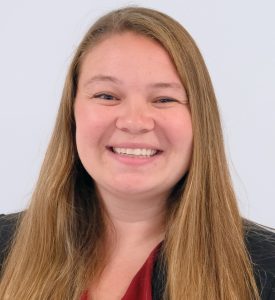
Jae Handler
Northeastern University, Boston, MA, United States of America
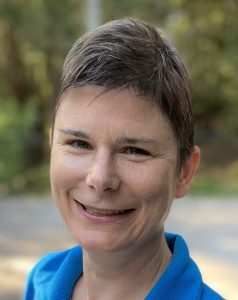
Kimberly Ho
Northeastern University, Boston, MA, United States of America (the)
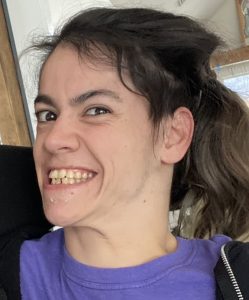
Sara Young