Fuenlabrada Hospital, Madrid, Spain Rey Juan Carlos UYniversity, Madrid, Spain
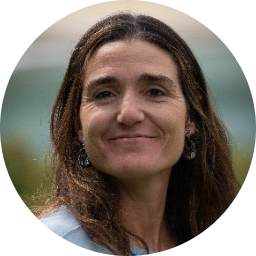
Ruth Candela Ramírez, MD, PhD, is a psychiatrist, psychologist, and researcher whose work lies at the intersection of mental health, disability studies, augmentative and alternative communication (AAC), and the history of psychiatry. She combines clinical practice, academic research, teaching, and knowledge translation to promote evidence-based, rights-oriented approaches to communication accessibility and mental health care. She currently works as a consultant psychiatrist at Hospital Universitario de Fuenlabrada (Madrid, Spain) and serves as Associate Professor of Psychiatry at Universidad Rey Juan Carlos. Alongside her clinical practice, she teaches in several national and international postgraduate programs, including the Universitat Oberta de Catalunya (UOC), Universidad Internacional de La Rioja (UNIR), the Specialist Program in Technology-Assisted Augmentative and Alternative Communication at the University of Castilla-La Mancha (UCLM), and the Diploma in AAC at Universidad del Desarrollo (Chile). She also coordinates postgraduate and specialist training in psychiatry and mental health within the Spanish National Health System. Dr. Candela holds a Medical Degree from the Universidad Autónoma de Madrid, a degree in Psychology from the Universidad Nacional de Educación a Distancia (UNED), a PhD in Medical Sciences from the Universidad Complutense de Madrid, and a Master’s degree in Neuropsychology from the Universitat Oberta de Catalunya. She completed her psychiatric residency at Instituto Psiquiátrico José Germain and has additional postgraduate training in integrative psychotherapy, forensic psychiatry, and augmentative and alternative communication. Her research follows two complementary lines. The first focuses on the history of psychiatry, collective mental health, and the experiences of psychiatric patients, particularly during the twentieth century in Spain. She has participated in several nationally funded competitive research projects supported by the Spanish Ministry of Science, the Instituto de Salud Carlos III, and European funding programs, investigating psychiatric institutions, mental health reform, patient narratives, and the social history of psychiatry. This work has contributed to recovering first-person accounts of psychiatric hospitalization and examining the historical relationships between psychiatry, institutions, and society. Her second and increasingly prominent research area focuses on augmentative and alternative communication, communication accessibility, neurodevelopmental disabilities, and inclusive education. Her work examines how communication environments, family and professional support, and interactional practices influence participation, autonomy, literacy, and quality of life for individuals with complex communication needs. She has published systematic reviews, narrative reviews, and empirical studies on AAC implementation, peer-mediated interventions, communication rights, family resilience, Angelman syndrome, and inclusive educational practices. More recently, her research has explored assisted interaction, multimodal communication, attachment, caregiver well-being, and the role of natural and formal supports in AAC implementation. A defining feature of Dr. Candela’s work is its interdisciplinary perspective, integrating psychiatry, psychology, education, disability studies, communication sciences, and the humanities. Across both historical and contemporary research, she is particularly interested in how social, institutional, and interactional structures shape opportunities for participation, communication, and the exercise of fundamental rights. Beyond academia, she is deeply engaged in knowledge mobilization and social impact. She is the founder and president of AlfaSAAC, a non-profit organization dedicated to training, research, family support, and advocacy in augmentative and alternative communication across the Spanish-speaking world. Through AlfaSAAC she has led educational initiatives, professional development programs, scientific dissemination activities, and projects promoting communication accessibility and literacy rights for people who use AAC. The organization has provided evidence-based training and support to thousands of professionals, families, and organizations in Europe and Latin America. She also serves as Vice President of ISAAC Español, the Spanish Chapter of the International Society for Augmentative and Alternative Communication, and is a board member of the Spanish Association of Neuropsychiatry and Mental Health Professionals (AEN-PSM). In these roles she contributes to scientific coordination, professional education, and the promotion of accessible, rights-based practices within health, educational, and community settings. Dr. Candela has authored numerous peer-reviewed articles, book chapters, scientific reviews, and professional guidelines on AAC, communication accessibility, disability, and the history of psychiatry. She has presented invited lectures and research papers at international conferences organized by ISAAC, the Spanish Association of Neuropsychiatry, the Network of Universities and Inclusive Education, and the Ibero-American Network for the History of Medicine, among others. She also serves as a reviewer for several national and international journals and is a member of the editorial board of the Revista de la Asociación Española de Neuropsiquiatría. Her work is united by a common objective: advancing communication, mental health, and inclusion through rigorous interdisciplinary research, critical reflection, and the translation of scientific evidence into clinical practice, education, and public policy. She is particularly committed to ensuring that people with complex communication needs are recognized not only as recipients of support but as active participants whose voices, experiences, and communication rights are central to healthcare, education, and society.
View a global list of converted local start times Session ID: 74 Objectives: As a result of this activity, the participant: will be able to describe the components of […]